Effluent Treatment Plants (ETP) for Industrial Wastewater Management
Effluent Treatment Plants (ETP) for Industrial Wastewater Management
Industrialization has significantly contributed to economic development, but it has also increased the generation of industrial wastewater containing harmful contaminants. Industries such as pharmaceuticals, chemicals, textiles, food processing, engineering manufacturing, and metal finishing discharge wastewater that contains oils, grease, heavy metals, toxic chemicals, dyes, and high organic loads. If untreated wastewater is discharged into the environment, it can severely damage aquatic ecosystems, contaminate groundwater resources, and pose risks to human health.
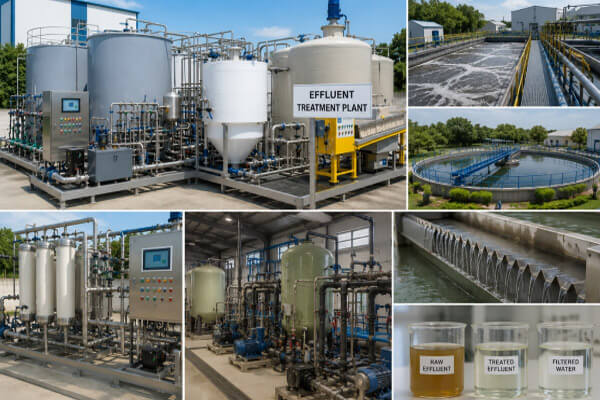
Effluent Treatment Plants (ETP) are specifically designed to treat industrial wastewater before it is discharged into the environment or reused within industrial processes. These systems are engineered to remove physical, chemical, and biological contaminants to meet regulatory standards set by pollution control authorities.
At Portico Environmental Services, effluent treatment plant design begins with a detailed assessment of wastewater characteristics. Parameters such as pH, Chemical Oxygen Demand (COD), Biological Oxygen Demand (BOD), Total Suspended Solids (TSS), Total Dissolved Solids (TDS), oil content, and heavy metal concentrations are evaluated to determine the appropriate treatment process.
A typical ETP system consists of multiple treatment stages that work together to remove pollutants effectively.
The process usually begins with preliminary and primary treatment, where wastewater passes through screening systems to remove large debris and suspended particles. Equalization tanks are used to stabilize wastewater flow and concentration fluctuations, ensuring consistent treatment performance in downstream processes.
Next, chemical treatment processes such as coagulation and flocculation are applied to remove suspended solids and emulsified oils. Chemicals such as alum, ferric chloride, or polymer flocculants help aggregate fine particles into larger flocs that can be removed through sedimentation or dissolved air flotation systems.
The secondary treatment stage involves biological treatment processes designed to remove dissolved organic pollutants. Technologies such as activated sludge processes, Moving Bed Biofilm Reactor (MBBR), and Sequencing Batch Reactor (SBR) systems are commonly used to degrade organic matter through microbial activity.
Finally, tertiary treatment is used to polish the treated water and remove remaining contaminants. This stage may include sand filtration, activated carbon filtration, ultrafiltration, reverse osmosis systems, or advanced oxidation processes depending on discharge requirements.
Modern industries are increasingly adopting advanced treatment technologies to recycle treated wastewater and reduce freshwater consumption. Portico Environmental Services specializes in designing customized effluent treatment solutions that integrate advanced technologies such as membrane filtration and water recovery systems.
In addition to plant design and installation, Portico provides comprehensive services including process optimization, environmental compliance consulting, and operation and maintenance support to ensure that industrial wastewater treatment systems operate efficiently and consistently meet regulatory standards.
Help and Support
response@portico-enviro.com