
Moving Bed Biofilm Reactor Technology for Efficient Sewage Treatment
Moving Bed Biofilm Reactor Technology for Efficient Sewage Treatment
The Moving Bed Biofilm Reactor (MBBR) technology is a highly efficient biological wastewater treatment process widely used in modern sewage treatment plants.
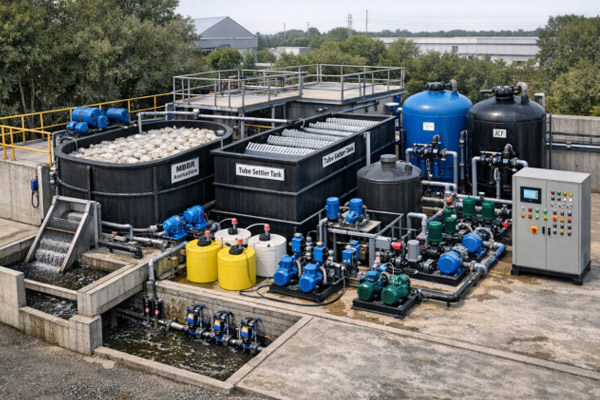
Traditional activated sludge systems rely on suspended microorganisms to degrade organic pollutants. However, these systems require large tanks and careful sludge management. MBBR technology overcomes these limitations by allowing microorganisms to grow on specially designed plastic carriers suspended in the aeration tank.
Traditional activated sludge systems rely on suspended microorganisms to degrade organic pollutants. However, these systems require large tanks and careful sludge management. MBBR technology overcomes these limitations by allowing microorganisms to grow on specially designed plastic carriers suspended in the aeration tank.
These carriers provide a large surface area for microbial growth. As wastewater flows through the reactor, microorganisms attached to the carriers consume organic pollutants and convert them into harmless byproducts such as carbon dioxide and water.
The carriers remain in constant motion due to aeration or mechanical mixing, ensuring uniform distribution of microorganisms throughout the reactor.
One of the major advantages of MBBR technology is its ability to maintain a high concentration of active biomass within a relatively small reactor volume. This results in higher treatment efficiency compared to conventional systems.
MBBR systems also produce less sludge and require lower operational maintenance. Because the microorganisms are attached to carriers rather than suspended in water, the system is more stable and less sensitive to shock loads or fluctuations in wastewater quality.
Typical components of an MBBR sewage treatment plant include equalization tanks, aeration reactors with biofilm carriers, secondary clarifiers, and tertiary treatment systems such as filtration and disinfection.
MBBR technology is widely used in residential complexes, commercial buildings, hospitals, hotels, and industrial wastewater treatment facilities.
Its compact design, high efficiency, and operational reliability make it one of the most preferred biological treatment technologies in modern sewage treatment plants.
Portico Environmental Services designs and installs advanced MBBR-based sewage treatment systems tailored to site-specific wastewater characteristics and treatment requirements.
Help and Support
response@portico-enviro.com